
Mujawarah for Life and Development
Mujawarah Launches Training Programme for Community Initiative Coordinators and Facilitators
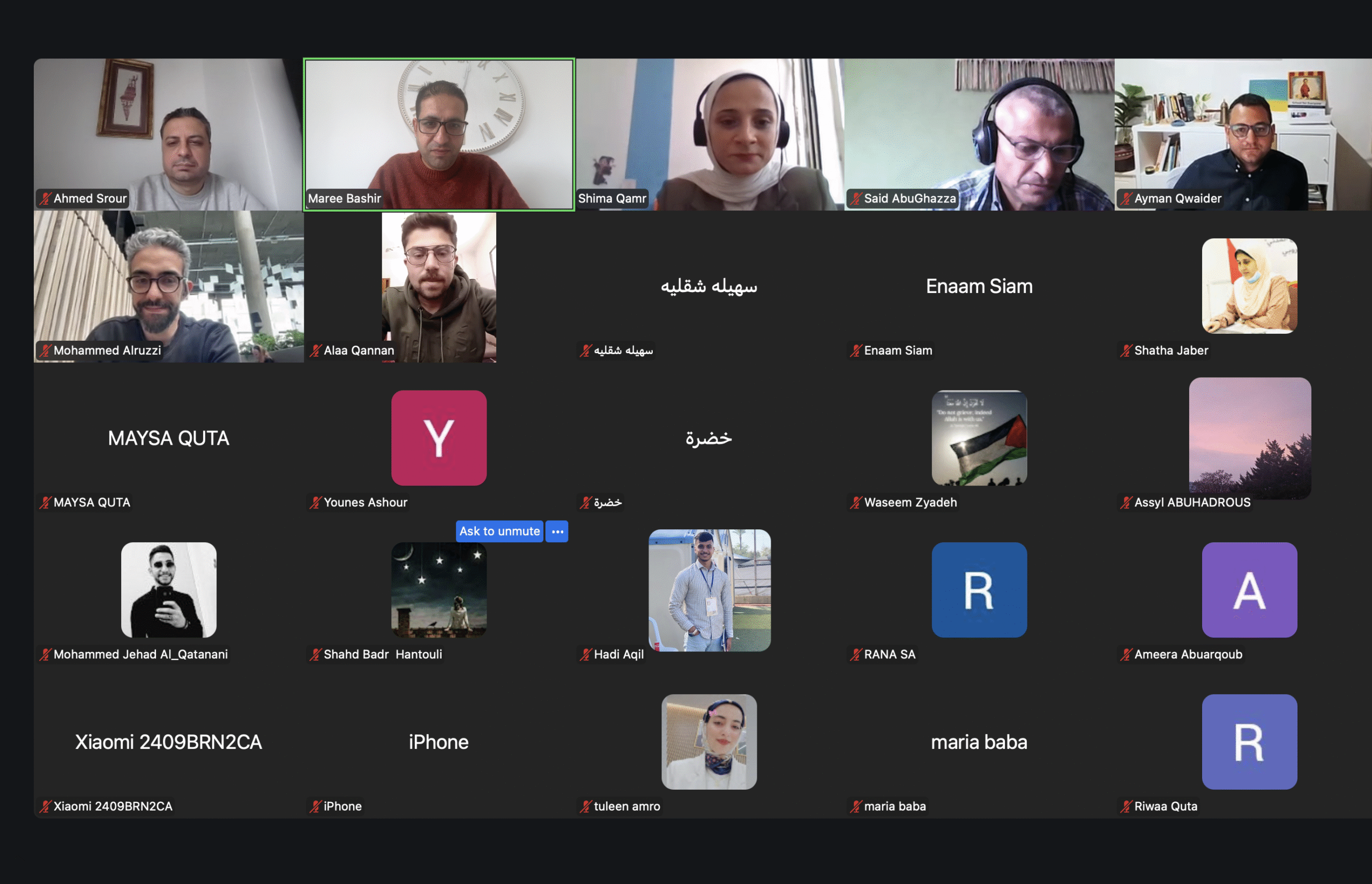
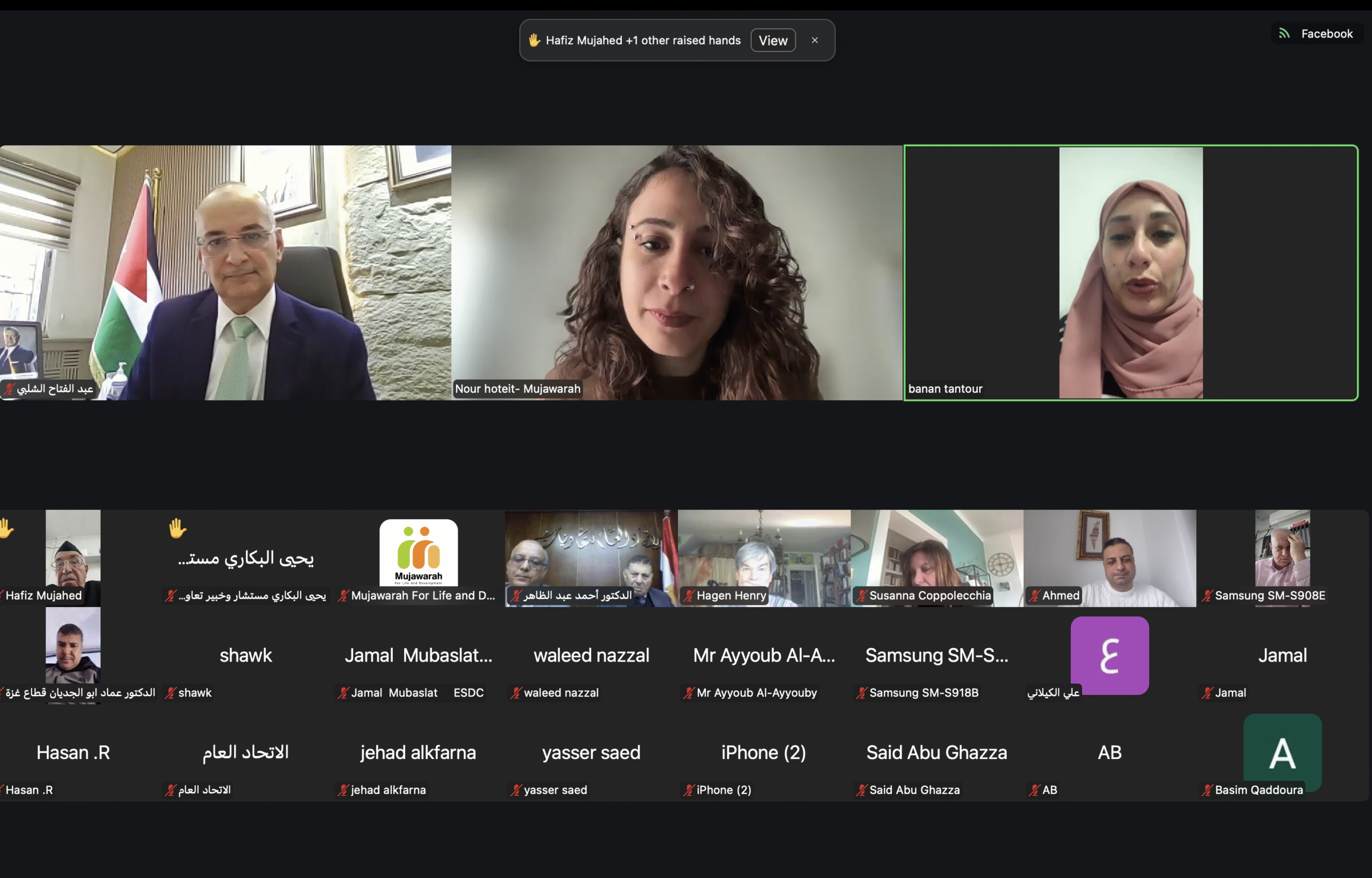
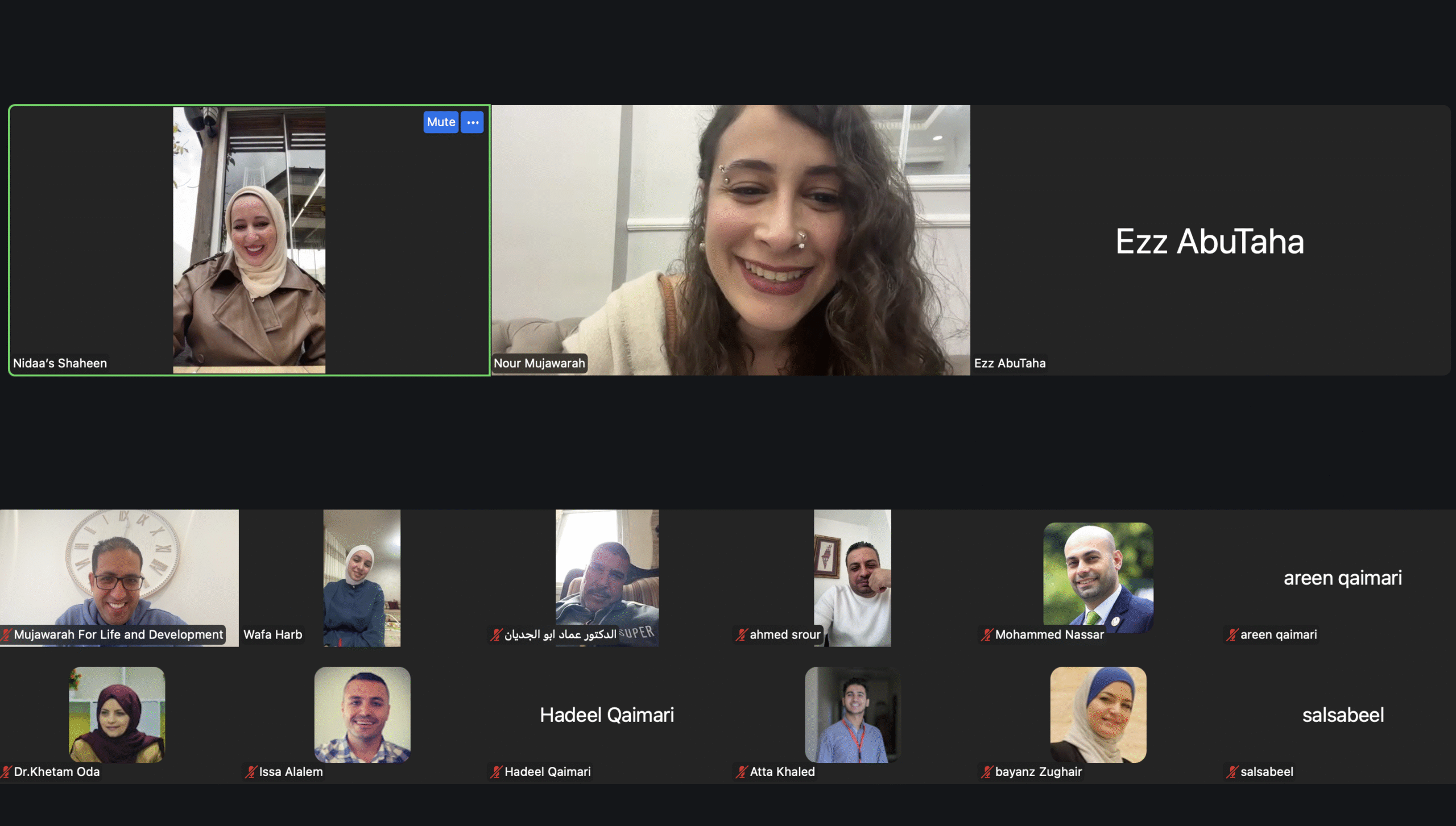
Mujawarah for Life and Development has launched its training programme for coordinators and facilitators of community initiatives and projects during an opening session that brought together participants from Palestine (the Gaza Strip and the West Bank) as well as Palestinians living abroad. The programme forms part of the organisation’s ongoing efforts to strengthen community participation and build the capacities of young people engaged in civic and developmental work.
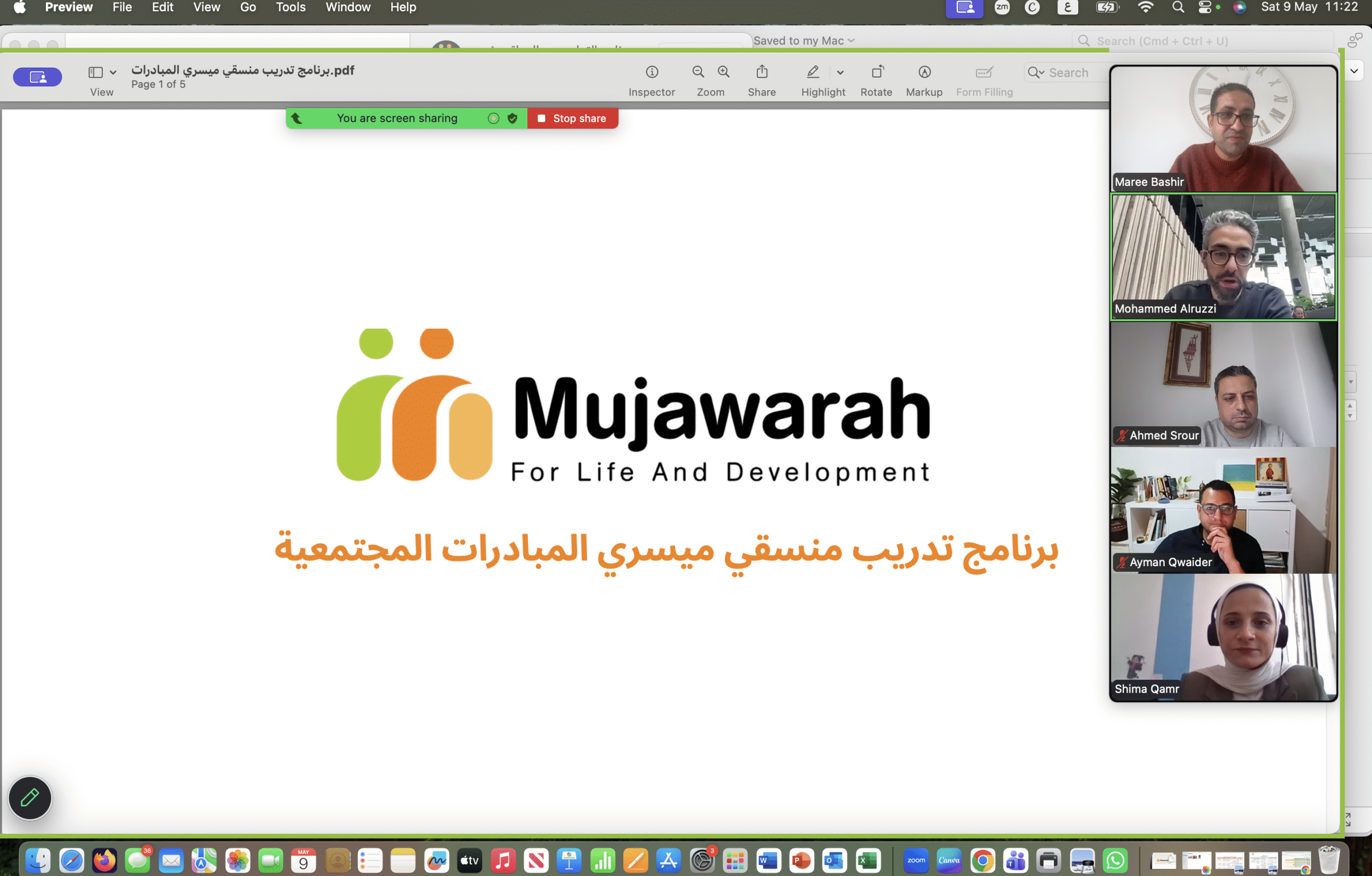
The session was opened by Shima Abu Qamar, Director of the Lifelong Learning Programme at Mujawarah, who introduced the agenda for the meeting, which included remarks from members of the Board, an overview of the training programme, and presentations by programme managers before the first knowledge session on community work. She also encouraged participants to engage actively in the gathering with a spirit of presence, reflection, and collective learning.
The session also featured remarks from Mujawarah’s Board members. Dr Mohammed Al-Rozzi, lecturer at the University of Bristol in the United Kingdom, highlighted the importance of creating spaces for reflection, learning, and dialogue amid the displacement and difficult political and humanitarian conditions experienced by Palestinians. He noted that Mujawarah was established as an attempt to restore the authentic meaning of Palestinian civic action, away from the distortions that have affected humanitarian and institutional work in recent years. He further stressed the importance of developing models of learning and community participation that emerge from the Palestinian reality and respond to people’s genuine needs.
For his part, Ayman Qwaider, Arab Community Coordinator at the Inter-agency Network for Education in Emergencies (INEE), emphasised the importance of sustaining Palestinian educational and community initiatives despite the immense challenges and harsh realities. He described the initiatives emerging in Gaza around learning and community organising as inspiring experiences worthy of documentation and further development. He also stressed the importance of strengthening solidarity and mutual support, and of connecting Palestinians inside and outside Palestine through shared spaces of learning and collective action.
The programme is rooted in Mujawarah’s vision of “learning through practice” and working alongside communities. Spanning six months, the programme combines practical learning, group coaching, and collaborative work within community initiative teams. It aims to equip participants with skills in community organising, initiative design, project management, community communication, documentation, monitoring, and evaluation.
Programme managers also introduced the organisation’s various programmes. Ahmad Srour, Director of the “Cooperatives for People” programme, spoke about the role of cooperatives in strengthening solidarity and community organising, as well as building economic and social models grounded in participation and collective action. Said Abu Gazza, Director of Gaza Programmes at Mujawarah, presented the Community Participation Programme and its role in promoting grassroots organising, community campaigns, and local initiatives. Shima Abu Qamar also introduced the Lifelong Learning Programme, which focuses on experiential learning and supporting individuals in developing their personal and professional skills through community-based experiences.
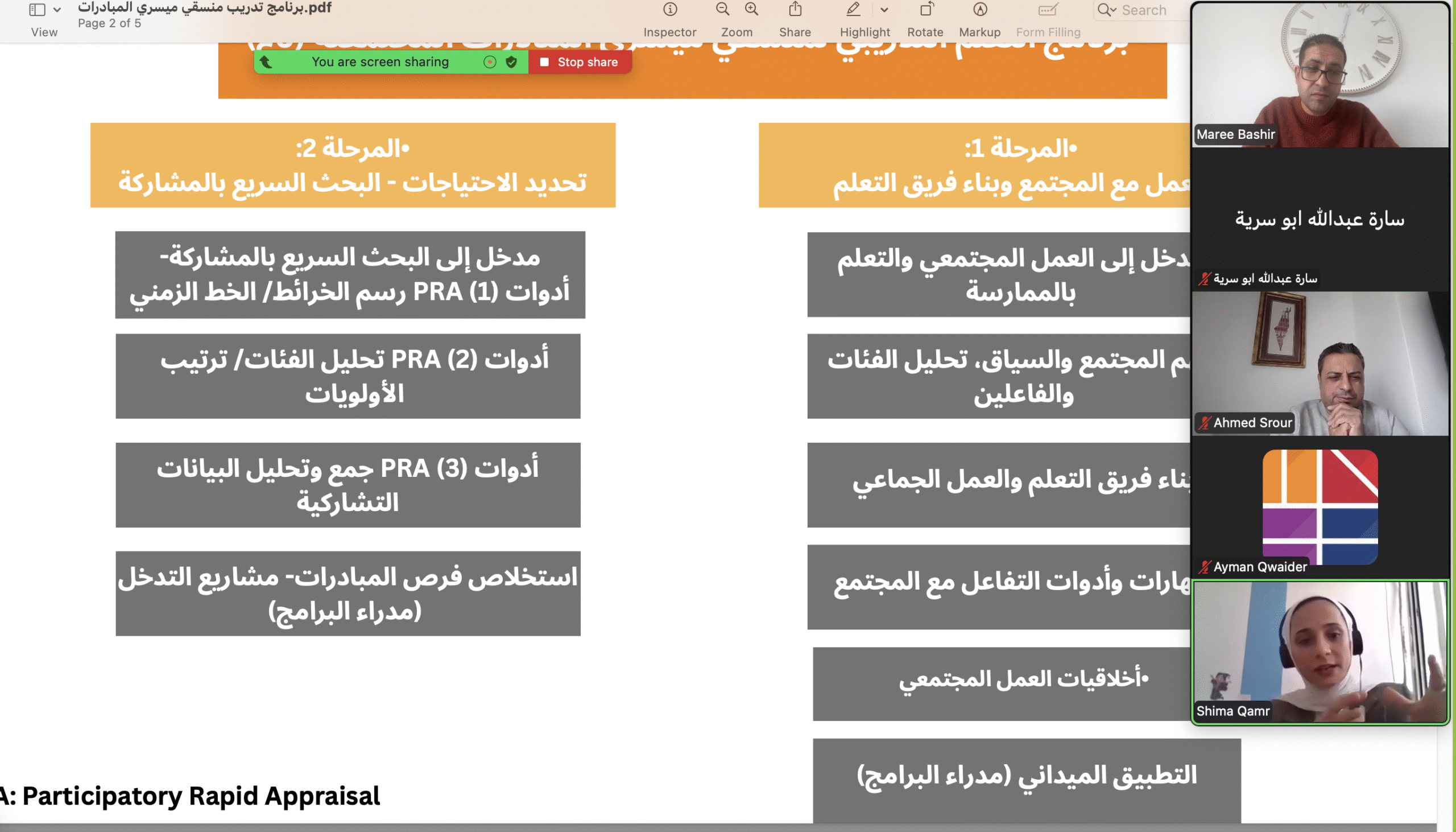
Marai Bashir, Founder and Director of Mujawarah for Life and Development, delivered the first knowledge session entitled “An Introduction to Community Work: Where Did the Idea Come From, and Why Do We Work With People Rather Than on Their Behalf?” During the session, he explored the historical development of community work and civil society, tracing the shift from charitable assistance towards approaches centred on empowerment, participation, and community organising.
Bashir stressed that genuine community work must emerge from people themselves, their lived experiences, and their everyday knowledge, rather than from ready-made solutions imposed upon them. He emphasised the importance of viewing communities as partners in understanding, decision-making, and action, rather than merely recipients of services. He also reflected on the rich Palestinian experience of grassroots organising, from local committees, cooperatives, voluntary work, and mutual aid traditions to broader community-based models that historically contributed to strengthening Palestinian resilience.
The session included an interactive discussion during which participants shared critical reflections on the current state of Palestinian civil society, particularly in light of declining meaningful participation, the dominance of some institutional and donor-driven approaches, and the widening gap between people’s actual needs and the interventions designed for them. Participants also discussed the importance of reclaiming authentic community action grounded in proximity to people, understanding their realities, and building initiatives with communities rather than on their behalf.
The session concluded with participants reaffirming the importance of rebuilding Palestinian civic action on the basis of genuine participation and community engagement, while drawing on the historical Palestinian legacy of grassroots initiatives and cooperative action in ways that strengthen resilience, collective agency, and community organisation.
مؤسسة مجاورة للحياة والتنمية تطلق برنامج تدريب منسقي وميسري المبادرات المجتمعية
أطلقت مؤسسة مجاورة للحياة والتنمية برنامجها التدريبي لإعداد منسقي وميسري المبادرات والمشاريع المجتمعية، وذلك خلال جلسة افتتاحية جمعت مشاركين من فلسطين (قطاع غزة والضفة الغربية) ومن خارج فلسطين، في إطار جهود المؤسسة لتعزيز المشاركة المجتمعية وبناء قدرات الشباب في العمل المدني والتنموي
وافتتحت الجلسة شيماء أبو قمر، مديرة برنامج التعلم مدى الحياة في مؤسسة مجاورة، وقدمت نبذة عن أجندة اللقاء التي تضمنت كلمات لمجلس الإدارة، واستعراضاً للبرنامج التدريبي ومداخلات مدراء البرامج، قبل بدء الجلسة المعرفية الأولى حول العمل المجتمعي. كما دعت المشاركين إلى التفاعل مع اللقاء والانخراط فيه بروح من الحضور والتأمل والتعلم المشترك
كما تضمنت الجلسة كلمات لمجلس إدارة مجاورة، حيث أكد الدكتور محمد الرزي، المحاضر في جامعة بريستول بالمملكة المتحدة، أهمية خلق مساحات للتفاكر والتعلم والحوار في ظل حالة التشتت والظروف السياسية والإنسانية الصعبة التي يعيشها الفلسطينيون، مشيراً إلى أن مؤسسة مجاورة جاءت كمحاولة لاستعادة المعنى الأصيل للعمل المدني الفلسطيني، بعيداً عن التشوهات التي لحقت بالعمل الإنساني والمؤسساتي خلال السنوات الأخيرة. كما شدد على أهمية بناء نماذج تعلم ومشاركة مجتمعية تنبع من الواقع الفلسطيني وتستجيب لاحتياجات الناس الحقيقية
من جانبه، أكد الأستاذ أيمن قويدر، منسق المجتمع العربي في الشبكة المشتركة لوكالات التعليم في حالات الطوارئ (INEE)، أهمية استمرار المبادرات التعليمية والمجتمعية الفلسطينية رغم التحديات والظروف القاسية، مشيراً إلى أن ما يحدث في غزة من مبادرات تعلم وتنظيم مجتمعي يمثل نموذجاً ملهماً يستحق التوثيق والبناء عليه. كما شدد على أهمية تعزيز قيم التضامن والتكافل وربط الفلسطينيين داخل فلسطين وخارجها عبر مساحات العمل والتعلم المشترك
ويأتي البرنامج ضمن رؤية مؤسسة مجاورة للحياة والتنمية القائمة على “التعلم بالممارسة” والعمل مع المجتمع، حيث يمتد البرنامج على مدار ستة أشهر، ويعتمد على الدمج بين التعلم العملي، والكوتشينج الجماعي، والعمل ضمن فرق المبادرات المجتمعية. ويهدف البرنامج إلى تمكين المشاركين من اكتساب مهارات التنظيم المجتمعي، وتصميم المبادرات، وإدارة المشاريع المجتمعية، والتواصل المجتمعي، والتوثيق والمتابعة والتقييم
كما قدم مدراء البرامج نبذة عن برامج المؤسسة المختلفة، حيث استعرض أحمد سرور، مدير برنامج “التعاونيات للناس”، دور التعاونيات في تعزيز التضامن والتنظيم المجتمعي، وبناء نماذج اقتصادية واجتماعية قائمة على المشاركة والعمل الجماعي. فيما قدم الأستاذ سعيد أبو غزة، مدير برامج غزة في مجاورة، عرضًا حول برنامج المشاركة المجتمعية وأهدافه في تعزيز التنظيم والعمل الشعبي والحملات المجتمعية والمبادرات المحلية. كما استعرضت شيماء أبو قمر برنامج التعلم مدى الحياة، الذي يركز على التعلم بالممارسة وتمكين الأفراد من تطوير مهاراتهم الشخصية والمهنية عبر التجربة المجتمعية
وقدم مرعي بشير، مؤسس ومدير مؤسسة مجاورة للحياة والتنمية، الجلسة المعرفية الأولى بعنوان “مدخل إلى العمل المجتمعي: من أين جاءت الفكرة؟ ولماذا نعمل مع الناس لا نيابة عنهم؟”، حيث تناول تطور مفهوم العمل المجتمعي والمجتمع المدني تاريخياً، والتحول من منطق المساعدة والعمل الخيري إلى منطق التمكين والمشاركة والتنظيم المجتمعي
وأكد بشير خلال الجلسة أن العمل المجتمعي الحقيقي ينطلق من الناس ومعرفتهم وتجاربهم اليومية، لا من حلول جاهزة تُفرض عليهم، مشدداً على أهمية النظر إلى المجتمع كشريك في الفهم والقرار والفعل، وليس كمجرد متلقٍ للخدمة. كما استعرض التجربة الفلسطينية الغنية في العمل الشعبي، من اللجان المحلية والتعاونيات والعمل التطوعي والعونة، وصولاً إلى نماذج مجتمعية أسهمت تاريخياً في تعزيز صمود المجتمع الفلسطيني
وشهدت الجلسة نقاشاً تفاعلياً قدّم خلاله المشاركون رؤى وملاحظات نقدية حول ما آلت إليه حالة المجتمع المدني الفلسطيني اليوم، لا سيما في ظل تراجع المشاركة الحقيقية، وهيمنة بعض أشكال العمل المؤسسي والممول، واتساع الفجوة بين احتياجات الناس والتدخلات المقدمة لهم. كما ناقش المشاركون الحاجة إلى استعادة الفعل المجتمعي الأصيل، القائم على القرب من الناس، وفهم احتياجاتهم، وبناء المبادرات معهم لا بالنيابة عنهم
واختُتمت الجلسة بتأكيد المشاركين على أهمية إعادة بناء العمل المدني الفلسطيني على أسس المشاركة الحقيقية، والتفاعل المجتمعي، والاستفادة من الإرث التاريخي الفلسطيني في المبادرات الشعبية والعمل التعاوني، بما يعزز صمود المجتمع وقدرته على المبادرة والتنظيم