
Mujawarah for Life and Development
Press Release
Forum of Cooperatives in Palestine Discusses Cooperative Sustainability and Financial Independence through Self-Investment and Fair Partnerships
United Kingdom – 6 June 2026
The Forum of Cooperatives in Palestine held an extended panel discussion entitled “Sustainability and Cooperative Independence through Self-Investment, Financing, and Fair Partnerships”, organised by Mujawarah for Life and Development – United Kingdom, in partnership with the General Cooperative Union – Palestine, with the participation of experts and specialists from Palestine, Lebanon, and South Korea.
The dialogue was held as part of a knowledge-based and professional initiative through which the Forum seeks to revisit key issues facing Palestinian cooperative work from a critical and analytical perspective, taking into account the complex economic and political context in which Palestinian cooperatives operate, under occupation, structural restrictions, and a weak enabling environment. The Forum aims to provide an interactive space that brings together cooperatives, policymakers, experts, and supporting partners, contributing to knowledge production grounded in experience, the exchange of expertise, and the development of a shared understanding of the challenges facing this vital sector.
The discussion addressed the issue of financing cooperative work as one of the most influential questions shaping the future of the cooperative sector, particularly in relation to governance models and the relationship between cooperatives, their members, and their wider economic environment.
In his opening remarks, Mr Ezzeddin Abu Taha, Secretary-General of the General Cooperative Union – Palestine, stressed the importance of strengthening the financial independence of cooperatives by building sustainable internal resources and reducing reliance on grants, aid, and short-term projects. He noted that this approach protects cooperative decision-making and enhances the ability of cooperatives to withstand challenges and continue operating.
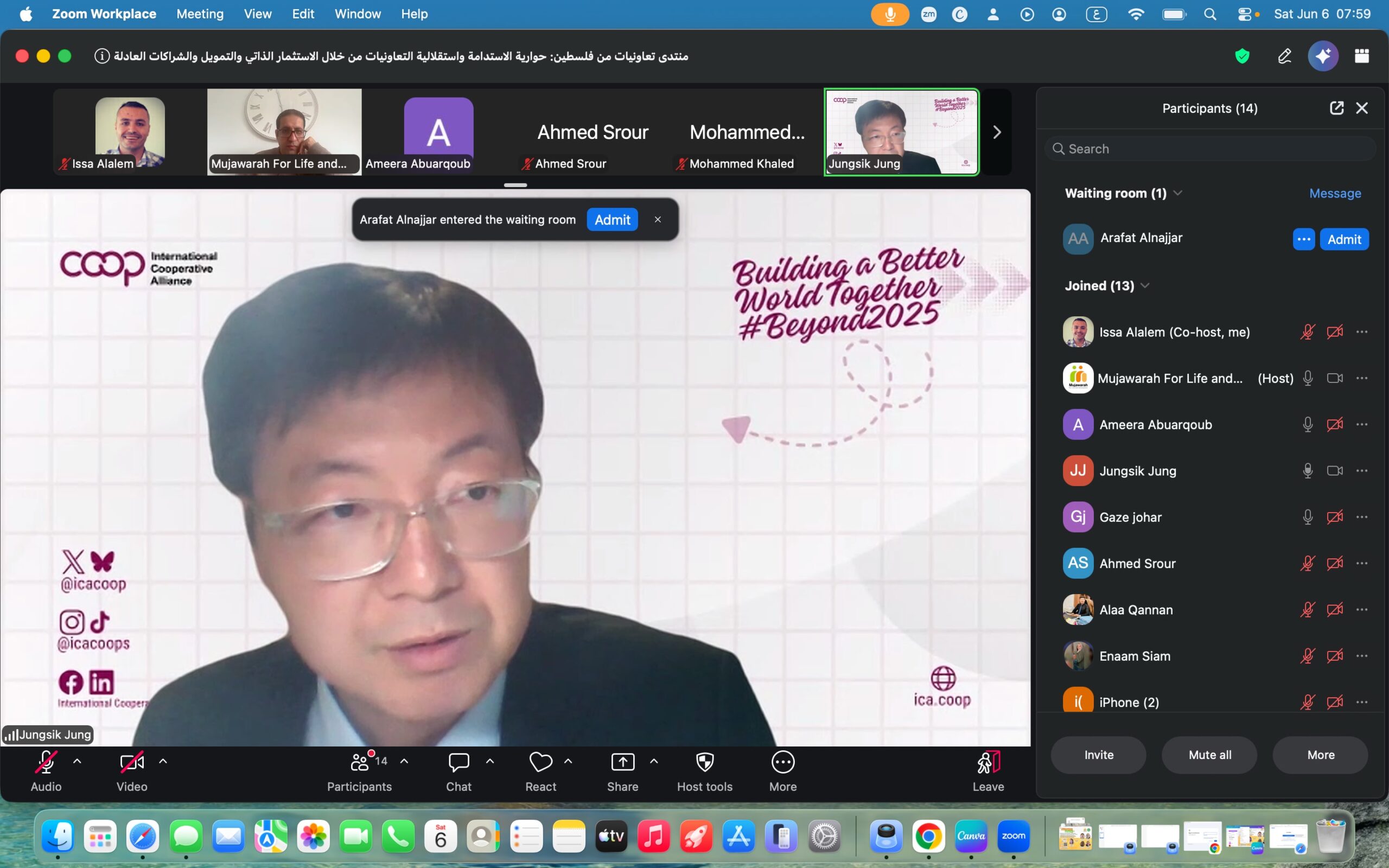
The panel featured four main speakers: Dr Jungsik Jung from South Korea, representing the Korean experience in agricultural cooperatives; Mr Mohammad Khaled from Palestine; Dr Atef Alawneh, an expert in cooperative finance and lending in Palestine; and Mr Bassam Asaad Amhaz, Board Member of the National Federation of Cooperatives in Lebanon, who presented a regional experience in establishing and managing cooperatives.
Dr Jungsik Jung, representing the National Agricultural Cooperative Federation in South Korea, presented the Korean experience as a leading model of cooperative sustainability. He noted that the federation includes more than 1,100 local cooperatives and 2.1 million members. He explained that the federation redistributes more than €4.7 billion annually to its members, at an average of approximately €2,200 per member. This, he said, reflects the ability of the Korean model to build a strong cooperative system based on self-investment, enhanced member contributions, and the reinvestment of returns within the cooperative movement in a way that supports sustainability and financial independence.
For his part, Mr Mohammad Khaled discussed the stages of cooperative development, explaining that cooperatives progress from the establishment phase and the provision of basic services to members, towards more advanced stages in which they engage in broader social and development initiatives. He emphasised the importance of striking a balance between the social and economic dimensions of cooperative work, ensuring that cooperatives are able to meet the needs of their members while strengthening their sustainability and community role.
Dr Atef Alawneh, a financial expert in the field of cooperative lending, highlighted the legislative challenges related to cooperative lending in Palestine. He called for the development of a dedicated legal framework that responds to the specific nature of cooperative work and its financing needs. He also called for greater openness to partnerships with the private sector and for drawing on successful economic experiences in ways that are compatible with the structure and identity of cooperatives, strengthening their ability to continue operating without compromising their decision-making independence. He further stressed that cooperatives carry out a national mission in serving the most vulnerable groups.
In his intervention, Mr Bassam Asaad Amhaz presented his experience in establishing and managing cooperatives in Lebanon, highlighting the challenges facing cooperative work under outdated legislation and successive economic crises. He pointed to the importance of moving cooperatives beyond their traditional framework towards more effective and sustainable models, through sound management, enhanced member trust, diversified sources of financing, and cooperative relationships and partnerships that serve the objectives of the cooperative. He stressed that transparency and good governance are fundamental to the success and sustainability of cooperatives, particularly in contexts facing accumulated economic and institutional pressures.
The panel concluded with a set of recommendations, most notably the need to develop self-investment tools within cooperatives, including mobilising members’ savings, strengthening cooperative capital, reinvesting surpluses, and establishing internal financial funds. The recommendations also stressed the importance of building fair and well-structured partnerships with the private sector, based on shared risks and returns, while preserving the cooperative’s strategic decision-making authority.
At the close of the discussion, participants affirmed that Palestinian cooperatives represent a social and economic model based on independence, democracy, and collective ownership. They emphasised that strengthening the financial independence of cooperatives is not only an institutional necessity, but also a national investment in the ability of local communities to remain resilient and pursue development, particularly under the current political and economic conditions.
The full panel discussion can be viewed below.
خبر صحفي
منتدى تعاونيات فلسطين يناقش الاستدامة والاستقلالية المالية للتعاونيات عبر الاستثمار الذاتي والشراكات العادلة
المملكة المتحدة – 6 حزيران/يونيو 2026
عقد منتدى تعاونيات فلسطين حلقة حوارية موسعة بعنوان “الاستدامة واستقلالية التعاونيات من خلال الاستثمار الذاتي والتمويل والشراكات العادلة“، بتنظيم من مؤسسة مجاورة للحياة والتنمية في بريطانيا، بالشراكة مع الاتحاد التعاوني العام في فلسطين، وبمشاركة خبراء ومختصين من فلسطين ولبنان وكوريا الجنوبية
وتأتي هذه الحوارية في إطار مبادرة معرفية ومهنية يسعى من خلالها المنتدى إلى إعادة طرح قضايا العمل التعاوني الفلسطيني ضمن مقاربة نقدية وتحليلية، تأخذ بعين الاعتبار تعقيدات السياق الاقتصادي والسياسي الذي تعمل فيه التعاونيات الفلسطينية، في ظل الاحتلال والقيود البنيوية وضعف البيئة التمكينية. ويهدف المنتدى إلى توفير مساحة تفاعلية تجمع التعاونيات وصناع السياسات والخبراء والشركاء الداعمين، بما يسهم في إنتاج معرفة قائمة على التجربة، وتبادل الخبرات، وبناء فهم مشترك للتحديات التي تواجه هذا القطاع الحيوي
وناقشت الحوارية قضية تمويل العمل التعاوني باعتبارها واحدة من أكثر القضايا تأثيراً في مستقبل القطاع التعاوني بما يؤثر في أنماط الحوكمة وعلاقة التعاونيات بأعضائها وبمحيطها الاقتصادي
وفي كلمته الافتتاحية، أكد عز الدين أبو طه، الأمين العام للاتحاد التعاوني العام في فلسطين، أهمية تعزيز الاستقلالية المالية للتعاونيات من خلال بناء موارد ذاتية مستدامة، وتقليل الاعتماد على المنح والمساعدات والمشاريع قصيرة الأمد، بما يحمي القرار التعاوني ويعزز قدرة التعاونيات على الصمود والاستمرار
وشارك في الحوارية أربعة متحدثين رئيسيين، هم الدكتور جونسيك جونغ من كوريا الجنوبية، ممثلاً للتجربة الكورية في التعاونيات الزراعية، والمستشار محمد خالد من فلسطين، والدكتور عاطف علاونة، الخبير في التمويل والإقراض التعاوني في فلسطين، وأ. بسام أمهز عضو مجلس إدارة الاتحاد الوطني للتعاونيات في لبنان، الذي قدّم تجربة إقليمية في تأسيس وإدارة التعاونيات
واستعرض الدكتور جونسيك جونغ، ممثل الاتحاد الوطني للتعاونيات الزراعية في كوريا الجنوبية، التجربة الكورية كنموذج رائد في الاستدامة التعاونية، مشيراً إلى أن الاتحاد يضم أكثر من 1100 تعاونية محلية و2.1 مليون عضو. وأوضح أن الاتحاد يعيد توزيع ما يزيد على 4.7 مليار يورو سنوياً على أعضائه، بمعدل يقارب 2200 يورو لكل عضو، وهو ما يعكس قدرة النموذج الكوري على بناء منظومة تعاونية قوية تقوم على الاستثمار الذاتي، وتعزيز مساهمة الأعضاء، وإعادة تدوير العوائد داخل الحركة التعاونية بما يخدم استدامتها واستقلاليتها المالية
من جانبه، تناول المستشار محمد خالد مراحل تطور التعاونيات، موضحاً أنها تمر بمسار يبدأ من مرحلة التأسيس وتقديم الخدمات الأساسية للأعضاء، وصولاً إلى مرحلة أكثر تقدماً تنخرط فيها التعاونيات في المبادرات الاجتماعية والتنموية الأوسع. وأكد خلال مداخلته أهمية تحقيق التوازن بين البعدين الاجتماعي والاقتصادي في العمل التعاوني، بما يضمن قدرة التعاونيات على تلبية احتياجات أعضائها من جهة، وتعزيز استدامتها ودورها المجتمعي من جهة أخرى.
أما الدكتور عاطف علاونة، الخبير المالي في مجال الإقراض التعاوني، فسلّط الضوء على التحديات التشريعية المرتبطة بالإقراض التعاوني في فلسطين، داعيًا إلى تطوير إطار قانوني خاص يستجيب لخصوصية العمل التعاوني واحتياجاته التمويلية. كما دعا إلى الانفتاح على الشراكة مع القطاع الخاص، والاستفادة من التجارب الاقتصادية الناجحة بما يتوافق مع بنية التعاونيات وهويتها، وبما يعزز قدرتها على الاستمرار دون المساس باستقلالية قرارها. وأكد في مداخلته أن التعاونيات تؤدي مهمة وطنية في خدمة الفئات الأكثر هشاشة
وفي مداخلته، عرض أ. بسام أمهز تجربته في تأسيس وإدارة تعاونيات في لبنان، مسلطاً الضوء على التحديات التي تواجه العمل التعاوني في ظل التشريعات القديمة والأزمات الاقتصادية المتلاحقة. وأشار إلى أهمية الانتقال بالتعاونيات من إطارها التقليدي إلى نماذج أكثر فاعلية وقدرة على الاستمرار، من خلال الإدارة السليمة، وتعزيز ثقة الأعضاء، وتنويع مصادر التمويل، وبناء علاقات تعاون وشراكة تخدم أهداف التعاونية. وأكد أن الشفافية والحوكمة الرشيدة تشكلان أساساً لنجاح التعاونيات واستدامتها، خصوصاً في البيئات التي تواجه ضغوطاً اقتصادية ومؤسسية متراكمة
وخلصت الحوارية إلى جملة من التوصيات، أبرزها تطوير أدوات الاستثمار الذاتي داخل التعاونيات، مثل تعبئة مدخرات الأعضاء، وتعزيز رأس المال التعاوني، وإعادة استثمار الفوائض، وإنشاء صناديق مالية داخلية. كما شددت التوصيات على أهمية بناء شراكات عادلة ومدروسة مع القطاع الخاص، تقوم على تقاسم المخاطر والعوائد، وتحافظ في الوقت ذاته على القرار الاستراتيجي للتعاونية
وفي ختام الحوارية، أكد المشاركون أن التعاونيات الفلسطينية تمثل نموذجاً اجتماعياً واقتصادياًَ قائماً على الاستقلال والديمقراطية والملكية الجماعية، وأن تعزيز استقلاليتها المالية لا يشكل فقط ضرورة مؤسسية، بل رهاناً وطنياً على قدرة المجتمعات المحلية على الصمود والتنمية، لا سيما في ظل الظروف السياسية والاقتصادية الراهنة
للمزيد يمكنكم مشاهدة الحوارية ادناه